

The Day I Learned Most Bands Have the Wrong Problem
- Luis David Bonilla
- Jun 15
- 3 min read

A few years ago, a bassist friend of mine called me for a lesson. But the lesson wasn’t just for him; it was for his whole band. He wanted me to attend their rehearsal, listen, and give advice on how to work better together.
This wasn’t entirely new to me because I’d been teaching at Danilo Pérez’s foundation. We had a class called Ensemble, where groups of 5 or 6 students worked on songs together. I also took an Ensemble class at the conservatory in Puerto Rico, where students were grouped based on their skill level.
However, this was the first time a real band—not just a group of students—had asked for my advice. After listening to them, I gave suggestions on how they could improve as a whole. I talked about using contrast, different rhythms, making sure the lyrics were clear, accentuating melodies, and ensuring the music was the main focus so everyone worked towards that common goal.
By the end of the two-hour session, they were thrilled. The concepts I shared didn’t require them to improve their technique or theory knowledge; they were simple ideas they could apply right away. And the improvement was remarkable.
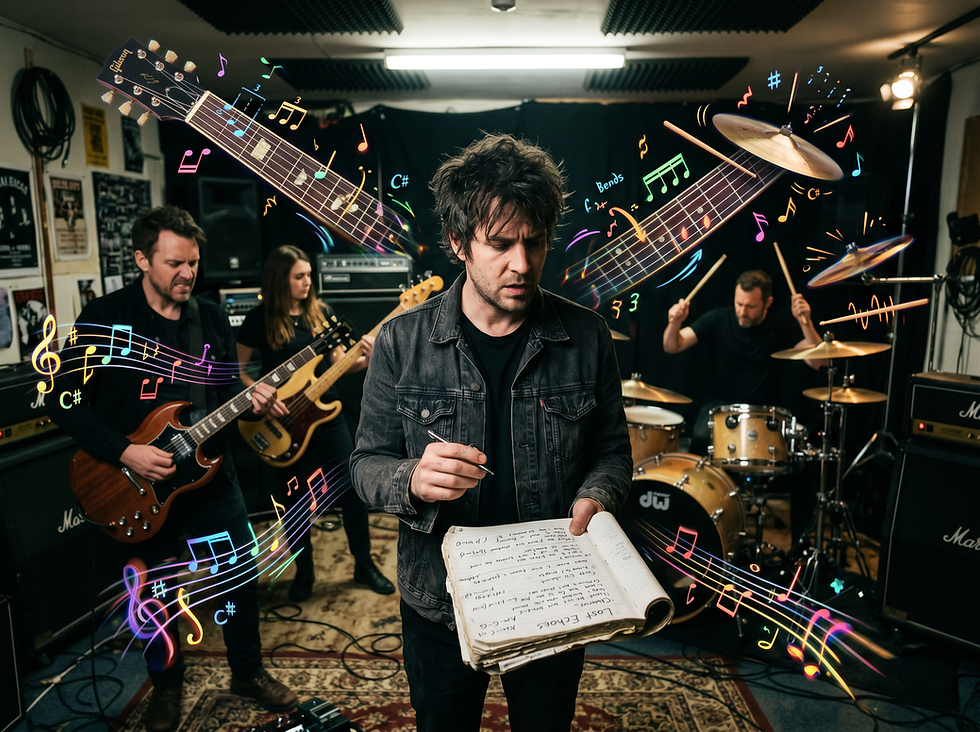
That experience stayed with me. Over the years, I’ve realized that many songs don’t need more tracks, more plugins, or more complexity.
By the end of that session, after hearing all the suggestions I shared, they realized that what they needed at that moment wasn’t better technique or more knowledge of their instruments. What they needed was to put all of their options on the table and understand how many different ways they could work together to make the song sound better.
I’m talking about the collective skills that make music stronger.
Once you’re working on a song, especially when you’re writing original music, you need clearly defined goals, and everyone has to be on the same page. The most important thing is the song itself; the melody and the lyrics. Everything else you do with your instrument is there to support that idea, to help that idea come across more clearly, to make it sound as good and as memorable as possible.
Naturally, everything starts with the melody and the lyrics. Once that part is in place, everything else you do should serve that purpose.
As you start working on these skills, you realize that a lot of it comes down to having more options and making better decisions. You can talk about where to play and where not to play; that’s probably the most basic example. Where are you overplaying? Where are there too many drum fills? Where are there unnecessary slaps? Where are there too many arpeggios? Where are there too many things happening that aren’t actually supporting the song?
There’s a place for all of those things. Slaps are cool. Fills are cool. Arpeggios are cool. Solos are cool. Riffs are cool. All of that is great. The question is where you put those things.
You can’t place them right in the middle of the song’s main message. In many songs, that message happens during the chorus. You have to be extremely clear about what you’re doing, why you’re doing it, and what you’re trying to accomplish every time you play a note.
Those are some of the first things a band should work on during rehearsal if the goal is to make a song as strong as possible. Ideally, a rehearsal is preparing you for one of two things; performing live or recording. Most of the time, it’s for a live performance. But even when a band is preparing to record an original song, the goal is still the same.
You want the message of the song to come across in the best possible way.
L. D. Bonilla
The Band Coach Method


Comments